
The journey of dog ownership is often filled with boundless joy, unwavering companionship, and, for some, a healthy dose of… well, stubbornness. If you’re currently navigating the world with a canine who seems to have a mind of their own, you’re not alone. The good news is that with the right approach, you can train stubborn dog naturally, transforming those challenging moments into opportunities for deeper connection and understanding. Forget harsh methods and frustrating power struggles; this guide focuses on positive, instinct-driven techniques that foster trust and make training feel surprisingly effortless.
Understanding the “Stubborn” Dog: It’s Not What You Think

Before diving into the “how-to,” it’s crucial to reframe our understanding of what we perceive as stubbornness. Often, a dog exhibits behaviors we label as stubborn not out of defiance, but for a variety of reasons that are perfectly natural to them. They might be:
Lacking Clear Communication: Your cues might be inconsistent, too subtle, or not understood by your dog. They are trying their best, but perhaps the signal isn’t landing.
Driven by Instinct: Certain breeds are predisposed to specific behaviors like herding, chasing, or digging. These instincts are powerful and deeply ingrained.
Seeking Something Else: A dog might ignore a command because a more enticing scent, sound, or even another dog has captured their attention. Their priorities are simply different in that moment.
Experiencing Fear or Anxiety: A fearful dog will often shut down or try to escape a situation, which can be misinterpreted as disobedience.
Physically Uncomfortable: Pain or underlying health issues can significantly impact a dog’s willingness to cooperate.
Boredom or Lack of Stimulation: A dog with pent-up energy will struggle to focus and may resort to undesirable behaviors.
By understanding these underlying causes, we can shift our perspective from frustration to empathy, paving the way for natural, effective training.
The Pillars of Training Stubborn Dog Naturally

The foundation of any successful training program, especially for dogs who require a little extra patience, lies in a few key principles. These are the cornerstones that will allow you to train stubborn dog naturally and see remarkable progress.
1. Positive Reinforcement is Paramount: This is the cornerstone of humane and effective dog training. Instead of punishment, which can create fear and damage your bond, positive reinforcement focuses on rewarding desired behaviors. This means using high-value treats, enthusiastic praise, favorite toys, or exciting games as incentives. When your dog performs the action you’re looking for, immediately acknowledge and reward it. Consistency is key here; the reward needs to follow the desired behavior closely so your dog makes the connection.
2. Build a Strong Bond First: A strong, trusting relationship is the bedrock upon which all training is built. Spend quality time with your dog, engaging in activities they enjoy whether it’s a long walk, a game of fetch, or simply cuddling on the couch. When your dog sees you as their source of comfort, security, and fun, they will be far more motivated to listen to you and please you. Training should feel like a collaborative effort, not a dictatorship.
3. Short, Frequent Training Sessions: Forget marathon training sessions. Stubborn dogs, like many dogs, have limited attention spans. Aim for several short (5-10 minute) training sessions throughout the day. This keeps the experience fresh and enjoyable, preventing boredom and frustration for both of you. End each session on a positive note, even if it’s just with a simple command they’ve mastered.
4. Consistency is Your Superpower: This applies to both your commands and your expectations. Everyone in the household should use the same words for commands and enforce the same rules. If “sit” means one thing to you and another to your partner, your dog will become confused. Similarly, if certain behaviors are sometimes allowed and sometimes not, your dog will struggle to learn boundaries. Absolute consistency will significantly accelerate your ability to train stubborn dog naturally.
Practical Techniques for Your Stubborn Companion
Now that we have established the philosophy, let’s explore some practical, natural training techniques that truly work.
Rewarding the “Right” Choices
Instead of correcting every mistake, focus on catching your dog doing something good. If your dog is lying calmly at your feet instead of barking at the mail carrier, lavish them with praise and perhaps a hidden treat. If they choose to look at you instead of chasing a squirrel, celebrate that choice! This proactive approach teaches them what you want them to do rather than just what they shouldn’t do. This is a powerful way to train stubborn dog naturally by making the correct behavior more rewarding than the unwanted one.
Leveraging Their Natural Drives
Think about what motivates your dog. Is it a specific toy? A chase game? Or perhaps a delicious, irresistible treat? Use these natural drives to your advantage. If your dog loves to chase, use a flirt pole or a favorite ball as a reward for completing a command before engaging in the chase. If they are food-motivated, use ultra-high-value treats (like tiny pieces of cheese or cooked chicken) for challenging commands or in distracting environments.
Making it a Game
Training should be fun! Turn commands into games. For example, to teach “come,” try hiding and calling their name with lots of excitement. When they find you, engage in a playful chase or give them a special toy. Make “stay” a game of finding hidden treats around the room. The more enjoyable you make the process, the more eager your dog will be to participate.
Gradual Introduction to Distractions

A dog that’s well-behaved in a quiet living room might seem like a different animal at the park. Introduce new environments and distractions gradually. Start in a low-distraction area and slowly increase the level of external stimuli as your dog’s reliability grows. Practice commands at the edge of a park before venturing further in, rewarding every small success. This process helps them generalize their learning and prove that you can effectively train stubborn dog naturally even in stimulating settings.
Patience and Persistence
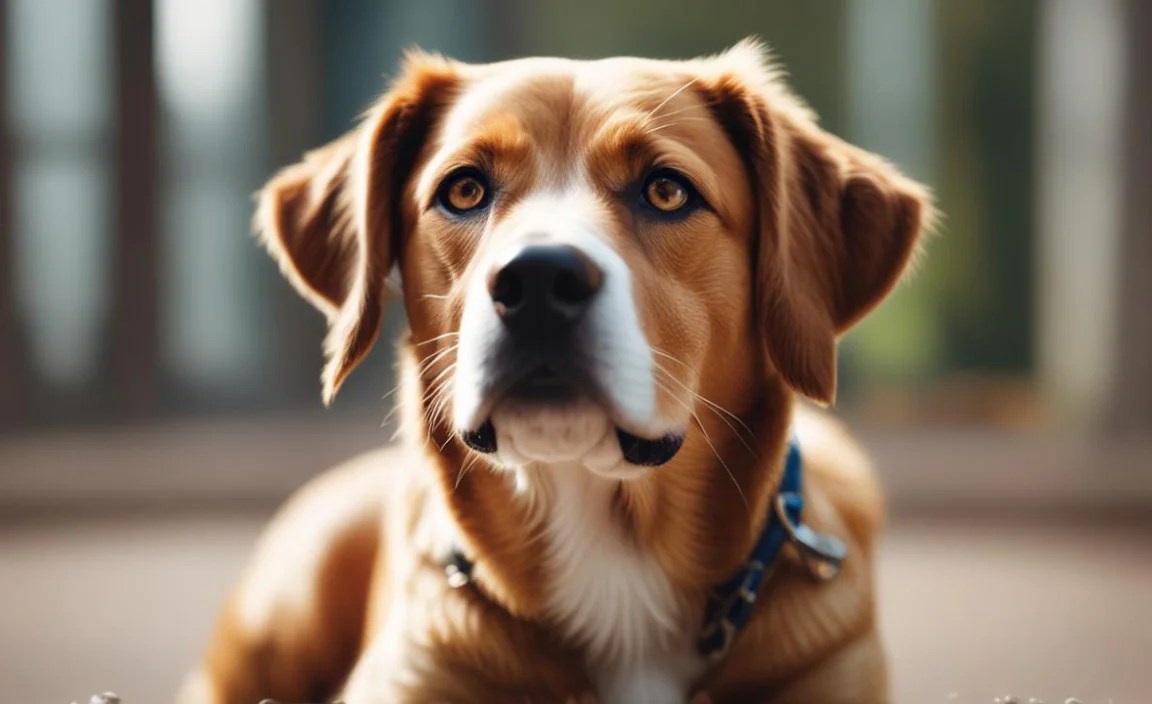
This is perhaps the most important element. There will be days that feel like a step backward. Your dog might seem to forget everything they’ve learned. This is normal. Take a deep breath, revert to simpler exercises, and end on a positive note. Celebrate the small victories, acknowledge the challenges with empathy, and never give up on your furry friend. Your unwavering commitment, combined with positive, natural methods, will unlock their potential and lead to a more harmonious life together.
Training a dog that exhibits stubborn tendencies is not about breaking their spirit, but about building a bridge of communication and understanding. By embracing positive reinforcement, building a strong bond, and employing consistent, natural techniques, you can transform those “stubborn” moments into triumphs, fostering a loyal and well-behaved companion for years to come.

Meet Elyse Colburn, the devoted canine companion and storyteller behind the enchanting world of “Tales, Tails, and Adventures Unleashed.” A passionate dog enthusiast with a heart full of paw prints, Elyse Colburn shares heartwarming tales and insightful adventures, celebrating the joy, loyalty, and endless antics that make every dog a true hero. Join Elyse Colburn on this tail-wagging journey, where every post is a love letter to our four-legged friends.